Computational neuroscience
I build biophysically detailed, multiscale models of neural tissue, from ion channels, pumps and diffusion to cellular metabolism, to understand why some neurons and circuits are vulnerable to disease while others are resilient.
Most of my work is on spreading depolarization, the slow wave of near-complete depolarization that accompanies ischemic stroke, migraine aura and brain injury, and on cell-to-cell variability in primary motor cortex. I am a developer of the NEURON simulator, where I helped build the reaction-diffusion module that lets electrophysiology models include the ion and metabolite dynamics they usually leave out.
Research highlights
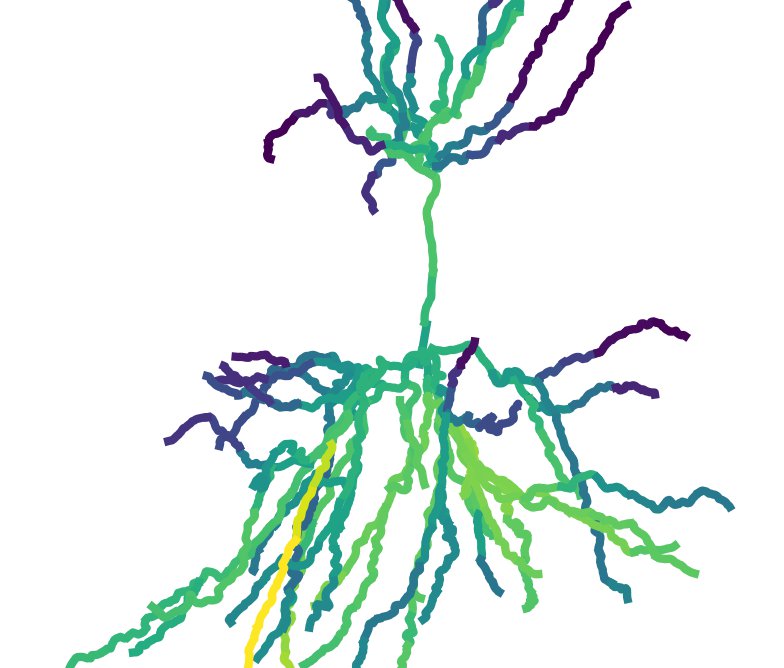
Vulnerable dendrites
Ischemia and spreading depolarization load different parts of the dendritic tree with calcium and chloride.
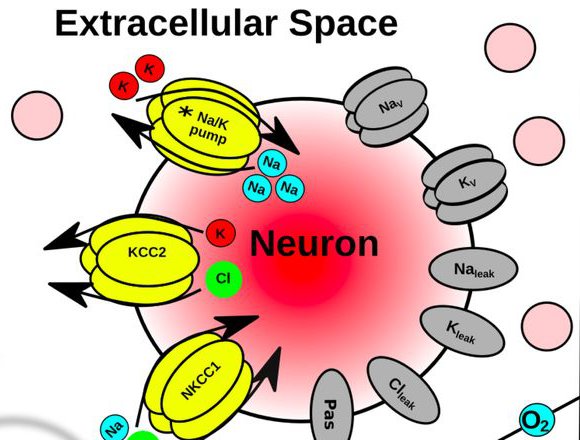
Tissue-scale SD
Tens of thousands of neurons, ions and oxygen in the extracellular space of a slice and of cortex.
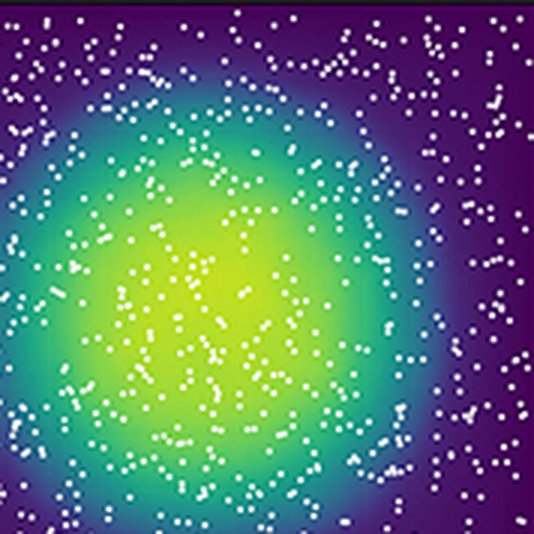
NEURON reaction-diffusion
Simulation tools for ions and molecules inside cells and in the extracellular space.
Recent publications
-
Computer models predict differential dendritic vulnerability with ischemia and spreading depression
2026PLOS Computational Biology 22, e1014701
In a morphologically detailed model of a hippocampal CA1 pyramidal neuron, calcium accumulates most in the basal dendrites during both ischemia and spreading depolarization, suggesting they are most exposed to excitotoxicity. Only ischemia exposes the distal apical dendrites to high chloride, a possible route to dendritic beading.
PaperModel on ModelDB -
Multiscale Computer Modeling of Spreading Depolarization in Brain Slices
2022eNeuro 9, ENEURO.0082-22.2022
A model of 36,000 neurons in the extracellular space of a brain slice, with K+, Na+, Cl− and O2 diffusion, reproduces spreading depolarization at realistic speeds and predicts that extracellular volume, neuronal density and oxygenation control its spread.
PaperModel on ModelDB -
Efficient Simulation of 3D Reaction-Diffusion in Models of Neurons and Networks
2022Frontiers in Neuroinformatics 16, 847108
A finite-volume method in NEURON for 3D intracellular reaction-diffusion, coupled to NEURON's 1D electrophysiology. It captures dynamics in spines and near the soma that 1D simulations miss.
PaperModel on ModelDB